
Teeth Hurt When Eating Chocolate? (No Cavity — Warning Sign You Shouldn’t Ignore)
If your teeth hurt when eating chocolate but there’s no cavity, this page explains the real cause behind this sensitivity — and why it may be an early warning sign rather than a random reaction.
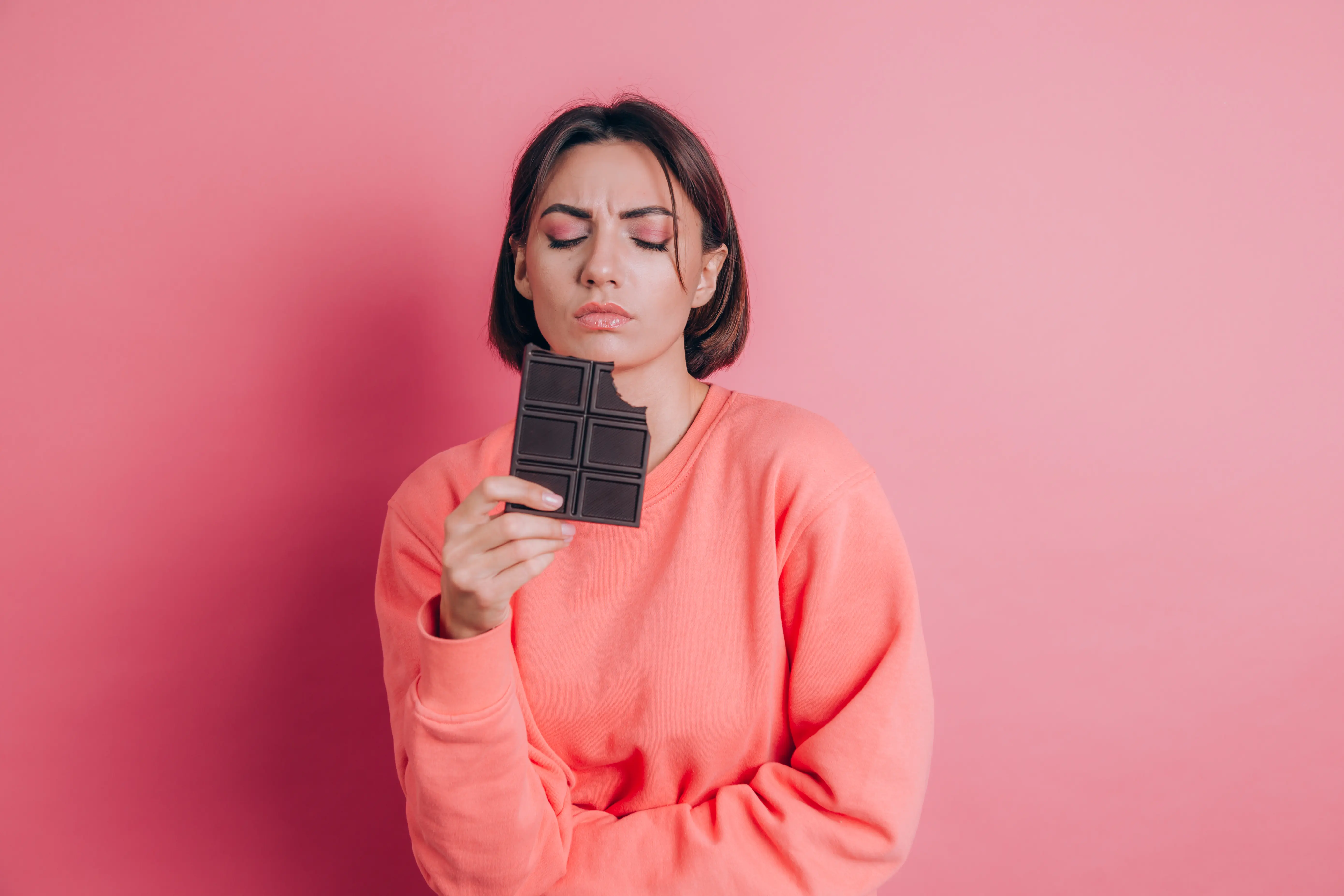
Image credit: Freepik
Why do my teeth hurt when I eat chocolate or sweets?
Short answer: it’s usually not a cavity — but it’s also not something to ignore. This type of pain often signals early enamel weakness or internal imbalance that can worsen over time if the underlying cause isn’t addressed. In many cases, what feels like “random sensitivity” is actually an early-stage pattern linked to enamel porosity, microbiome disruption, or mineral depletion — long before visible damage appears. 👉 The key question is not “is it a cavity?” 👉 It’s: what’s allowing sugar to reach the nerve in the first place?What most people get wrong:
- ✔ Brushing more → doesn’t fix the root cause
- ✔ Avoiding sweets → reduces symptoms, not the mechanism
- ⚠ Using random products → often targets the wrong layer
- ❗ What’s rarely explained → the internal imbalance driving sensitivity
If your teeth hurt when eating chocolate or sweets — but your dentist says there’s no cavity — that doesn’t mean nothing is happening. In fact, similar sensitivity patterns are often triggered by environmental factors like cold exposure, as explained in this analysis of cold air tooth sensitivity.
In many cases, this type of pain is an early warning signal. Not of visible damage, but of internal changes that are still developing.
What makes this confusing is that everything can look “normal” during a dental check — while the underlying pattern continues progressing quietly.
And this is exactly why many people ignore it… until the sensitivity becomes harder to reverse.
In many cases, this reaction is linked to early enamel changes or internal imbalance — patterns also seen in tooth sensitivity without a clear dental cause.
Quick breakdown:
- ✔ What’s happening → enamel is becoming more reactive
- ✔ What triggers it → sugar + microbiome + pH imbalance
- ⚠ What most people miss → early-stage weakening (before cavities)
- ❗ What matters → whether the cause is being addressed or not
If this keeps happening every time you eat sweets, it’s usually not random — it’s a pattern linked to internal imbalance rather than surface damage.
Check Verified Microbiome Approach (Avoid Misdiagnosis)Official analysis for research purposes only • Secure verification link
Research suggests that recurring sugar-triggered tooth pain may be linked to internal mineral imbalance and microbiome disruption, especially in cases where tooth pain comes and goes without a clear pattern. See what recent enamel support formulations are being analyzed →
Why Your Teeth Hurt When Eating Chocolate or Sugary Foods
Unlike liquid sugars found in sodas, chocolate presents a unique biochemical challenge, often triggering symptoms similar to sharp tooth pain after eating acidic foods. It is a high-fat, high-sugar emulsion that is designed to melt at body temperature, creating a viscous film that coats the teeth.
Osmotic Pressure and the Sticky Adhesion Factor
Because chocolate is highly concentrated, it creates an extreme osmotic pull. If your enamel lattice is porous, this sugar concentration pulls fluid through your dentinal tubules. This "hydrodynamic shift" is amplified because the cocoa butter in chocolate adheres to the tooth, prolonging the osmotic trigger far longer than other sweets.
The Microbiome Connection: How Sugar Turns into Acid Shock
This reaction is deeply tied to your Oral Microbiome and Sugar processing, where specific bacteria thrive on the sticky residue chocolate leaves behind. These pathogenic biofilms rapidly metabolize the sugar into lactic acid, causing a localized "Acid Shock" that temporarily softens your enamel barrier. See how microbiome-targeted approaches are being evaluated in current research →
This type of reaction is often associated with bacterial imbalance and mineral depletion. Explore how targeted oral formulations are being evaluated for this condition .
3 Hidden Reasons Your Teeth React to Chocolate
1. Micro-Porosity in the Enamel Lattice
Healthy enamel should be an impenetrable crystal wall. However, systemic mineral depletion can leave the lattice "functionally open," a pattern often linked to early enamel demineralization signs, allowing chocolate's sugar to stimulate nerve endings instantly.
2. Salivary pH Imbalance and Cocoa Fats
Saliva is meant to wash away sugar, but when disrupted, it can create conditions similar to stress-related saliva pH imbalance. However, cocoa butter acts as a waterproof shield for bacteria, preventing your saliva from neutralizing the acid shock occurring at the enamel surface.
3. Dentin Tubule Exposure Near the Gumline
Chocolate's viscosity allows it to seep into the thin enamel transitions near your gums. Even microscopic recession can allow chocolate to bypass the enamel entirely.
At this stage, the issue is usually not surface-level.
✔ Microbiome-based approach
✔ No commercial bias
Secure redirection for research validation
Chocolate vs. Other Sweets: Why the Pain Lingers
| Factor | Chocolate (Cocoa + Sugar) | Gummy Candy (Pure Sugar) |
|---|---|---|
| Adhesion Level | High (due to cocoa butter/fats) | Medium (washes away faster) |
| Osmotic Pull | Extreme (highly concentrated) | High |
| Acid Duration | Long (sticky residue) | Short/Medium |
| Nerve Trigger | Rapid (Fat-Sugar Synergy) | Rapid |
| Primary Cause | Microbiome Dysbiosis / Porosity | Enamel Thinning |
If this pattern looks familiar, it may indicate that the issue is not surface-level. See the full microbiome-focused breakdown here →
To neutralize the 'Sticky Acid' effect, evidence suggests you must reinforce your enamel with Essential Trace Minerals. Without these ionic co-factors, the "gateways" to your tooth's nerves remain open to cocoa-induced osmotic shock.
If your teeth hurt every time you eat chocolate or sweets, this pattern may indicate progressive enamel weakening. See the full breakdown of what may help stabilize this condition →
In many cases, this type of chocolate-triggered pain is not just a surface issue—it reflects how your saliva pH influences enamel stability and how bacterial imbalance can intensify acid exposure over time. When the oral environment becomes acidic, even small amounts of sugar can trigger sharp discomfort. To understand how microbiome-driven imbalance contributes to this process, you can explore a deeper clinical perspective here: See Microbiome-Based Findings, Safety & Research Overview.
Are the symptoms actually caused by chocolate… or is chocolate just exposing an underlying issue?
Is This Something You Should Actually Worry About?
It depends on the pattern.
- ✔ If it happens occasionally → usually manageable
- ✔ If it happens repeatedly → indicates underlying imbalance
- ✔ If it’s getting stronger → requires deeper attention
The key is not eliminating the symptom temporarily — but understanding what is allowing it to happen in the first place.
What Happens If You Ignore This Type of Sensitivity?
In the early stages, this kind of pain may feel occasional or harmless. But when the underlying pattern is left unaddressed, the condition often evolves.
- ✔ sensitivity becomes more frequent
- ✔ triggers expand (cold, sweets, even air)
- ✔ enamel continues losing resistance
- ✔ discomfort becomes less reversible over time
What starts as a “chocolate-only issue” can gradually turn into a broader sensitivity pattern — especially when microbiome imbalance and mineral loss remain active.
Frequently Asked Questions (FAQ)
Not necessarily. While it has less sugar, dark chocolate is still highly osmotic and its solids can adhere just as effectively to porous enamel.
Water helps dilute the sugar concentration and neutralizes the osmotic pressure, halting the fluid shift in your dentin tubules.
Yes. It is a "pre-cavity" warning signal. It indicates that your enamel is losing mineral density even before a physical hole is visible to your dentist, often aligning with patterns seen in sweets-triggered tooth pain without cavities.
Why most sensitivity cases are NOT about cavities
What many people interpret as “random pain” is often a sign of imbalance at the microbiome and enamel level — not surface damage.
Understanding how these internal factors interact is what determines whether the condition improves… or slowly worsens.
Most reported issues are linked to incorrect diagnosis or non-targeted approaches.
✔ Research-backed analysis
✔ Non-commercial educational review
Secure redirection for authenticity verification • Research-based analysis
Quick Summary
- ✔ Chocolate pain without cavities is usually linked to sensitivity
- ✔ The root cause is often enamel + microbiome imbalance
- ✔ The symptom is early-stage — but can progress over time
- ✔ Addressing the cause early improves reversibility
1. ADA (American Dental Association): Sweet Sensitivity and the Science of Osmosis.
2. Journal of Oral Rehabilitation: The impact of sticky high-sugar foods on dentinal fluid flow.
3. PubMed Central (PMC): Effect of cocoa butter and sugar concentration on biofilm pH drops.