White Spots on Teeth: What Causes Them and What They May Indicate
Reviewed by: Dr. Alexander Thorne, DDS – Oral Microbiology Researcher
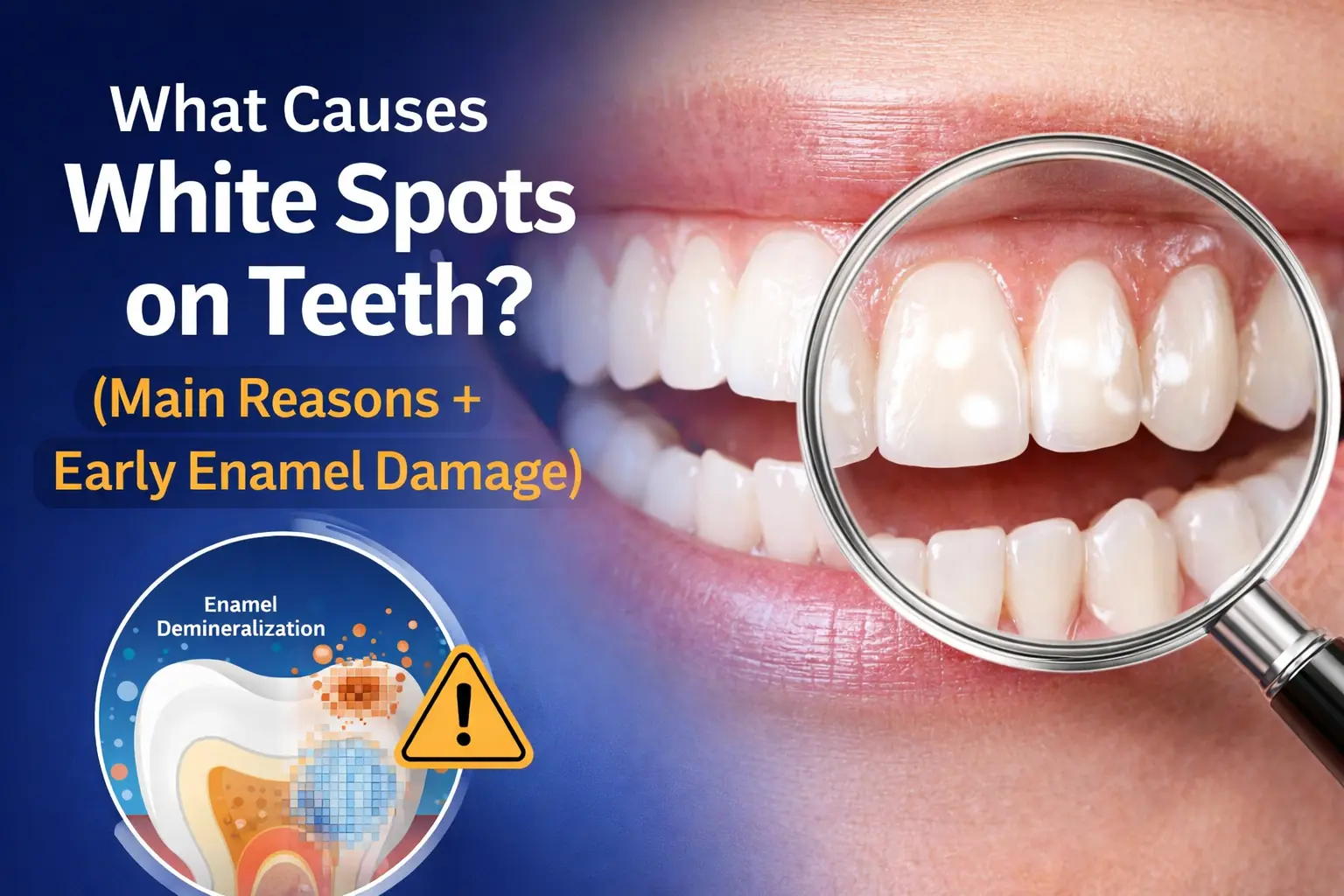
White spots on teeth are usually caused by early enamel demineralization — not surface stains.
The most common causes include:
- Plaque buildup after braces
- Frequent sugar consumption
- Acidic foods and drinks
- Poor oral hygiene in specific areas
- Low mineral levels in saliva
👉 In most cases, white spots are an early warning sign of enamel weakening — not just cosmetic stains.
Can they be reversed? In early stages, yes — if the underlying cause is addressed and mineral balance is restored.
White spots on teeth often appear suddenly, but they are usually the result of gradual mineral loss happening beneath the surface.
What makes them dangerous is that the real cause is often hidden — and if it’s not identified early, the damage can continue progressing silently.
What Causes White Spots on Teeth? (Most Common Reasons Explained)
- Plaque accumulation (especially after braces)
- High sugar intake feeding acid-producing bacteria
- Frequent exposure to acidic foods or drinks
- Dry mouth or low salivary mineral content
- Imbalance in oral microbiome
In many cases, these spots are an early sign of enamel damage before cavities develop.
These enamel changes are often linked to deeper imbalances in the oral microbiome, which can influence how minerals are lost or retained over time. You can explore this mechanism in detail in the oral microbiome analysis.
This is where most people get confused. White spots don’t appear randomly — they are usually triggered by specific changes in your oral environment. In many cases, people don’t notice the cause because it happens gradually, whether from diet, braces, or shifts in saliva composition.
In some cases, these white spots may resemble other conditions such as calcium deposits or early enamel erosion, which require a different interpretation.
*Status: Critical mineral drain detected. Ionic intervention required.
How to Stop White Spots from Getting Worse
To prevent white spots from worsening, focus on these key actions:
- Reduce frequent sugar exposure (especially between meals)
- Limit acidic drinks like soda and citrus
- Improve brushing precision in hard-to-reach areas
- Support saliva flow and mineral balance
If the underlying cause is not addressed, these spots can progress into permanent enamel loss. Supporting your mouth’s natural remineralization process helps restore mineral balance and allows enamel to repair itself over time.
If White Spots Are Already Visible, Your Enamel May Be Under Active Mineral Loss
If white spots are already forming, your enamel may be losing minerals faster than it can rebuild — and in many cases, this process continues silently until visible damage becomes permanent. Understanding the cause is the first step — but restoring mineral balance is what prevents these spots from turning into permanent damage or cavities — especially when using a structured mineral-based enamel protocol.
See How to Rebuild Enamel Naturally →