
Why Do My Teeth Hurt After Eating Fruit? (Acid Sensitivity Explained)
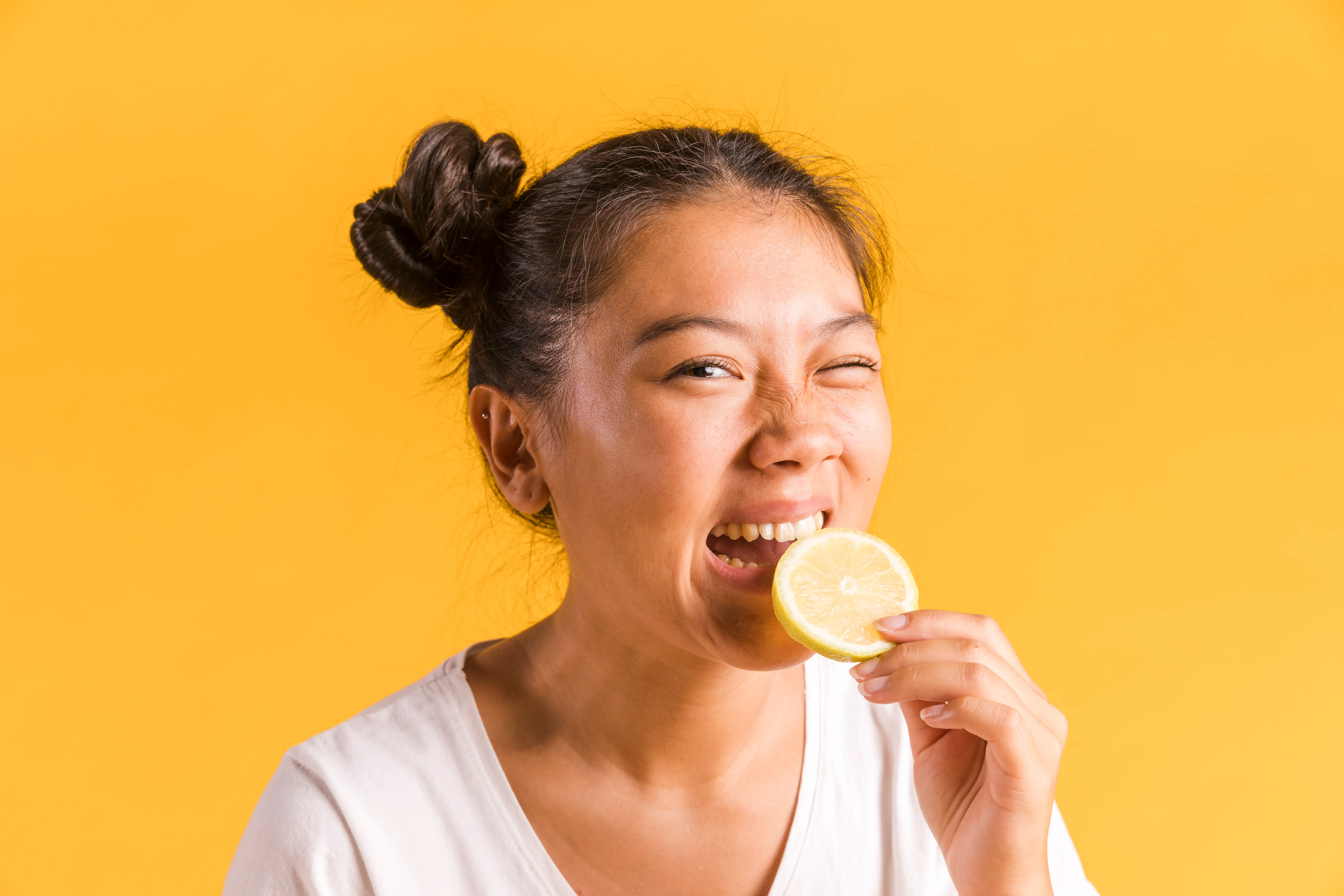
If your teeth hurt immediately after eating fruit, or even when consuming sweets like chocolate, the most common cause is acid erosion. Acidic fruits weaken your enamel within minutes, making your teeth more sensitive to pressure, temperature, and sugar. This is why the pain feels sudden, sharp, and intense — even when there are no visible dental problems.
This type of sensitivity is not random — and in most cases, it is not caused by cavities. Instead, it reflects a systemic imbalance involving enamel weakening, salivary pH disruption, and microbiome activity. When this internal environment is not stabilized, the condition tends to progress — meaning triggers become more frequent, more intense, and harder to reverse over time.
How Acidic Fruits Cause Enamel Erosion and Tooth Pain
Fruits are vital for health, but their chemical composition can be aggressive toward dental structures. Citric and malic acids are highly effective at chelating calcium, meaning they temporarily strip minerals from your enamel surface.
The Science of Acidic Saliva (The Real Culprit)
In a balanced mouth, your saliva acts as a natural shield. However, if your saliva pH stays low longer than it should, your teeth remain in a vulnerable state, unable to re-harden before the next stimulus.
Salivary pH plays a critical role in how quickly your enamel recovers after acid exposure. When this balance is disrupted, your teeth remain vulnerable for longer periods, increasing the likelihood of repeated pain episodes. This pattern is often not caused by a cavity, but by a deeper imbalance affecting enamel stability and oral bacteria. See how microbiome-based approaches are being evaluated for this condition → This creates a cycle where even mild dietary triggers can result in sharp, recurring sensitivity.
3 Reasons Fruits Cause "Phantom" Tooth Pain
1. Temporary Enamel Softening (The Acid-Erosion Cycle)
During the first 30 minutes after eating fruit, your enamel is in a softened state. This is when the crystalline structure is most vulnerable to temperature and chemical triggers.
2. Open Tubules and the Hydrodynamic Theory
As acid strips surface minerals, microscopic dentin tubules become exposed. Fluid shifts inside these tubules pull directly on the nerve endings.
3. Fructose Fermentation and Biofilm Acidity
Natural fruit sugars are fermented by pathogenic bacteria into lactic acid, creating a secondary attack on your teeth long after the fruit has been swallowed.
Acidic Impact of Common Fruits
| Fruit Type | pH Level (Approx) | Enamel Erosion Risk | Recommended Action |
|---|---|---|---|
| Citrus (Lemon/Lime) | 2.0 - 2.5 | Critical High | Rinse with water immediately |
| Berries (Strawberries) | 3.0 - 3.5 | Moderate High | Consume with alkaline protein |
| Apples | 3.5 - 4.0 | Moderate | Do not brush for 30 mins after |
What Helps Reduce Fruit-Induced Sensitivity (Clinical Perspective)
The Power of Natural Remineralization
To reverse the softening caused by acidic fruits, you must focus on natural remineralization using specific trace minerals that harden the enamel surface. For those who need to end the pain, the Steel Bite Pro systemic protocol is associated with supporting salivary balance and mineral flow.
If your teeth hurt after eating fruit, the issue often goes beyond surface enamel—it reflects how your saliva pH controls acid neutralization and how prolonged acidity keeps your enamel in a softened, vulnerable state. This same mechanism is frequently linked to sugar-related sensitivity, where discomfort appears suddenly after certain foods. You can understand how these patterns are connected here: Why teeth hurt when eating sweets without cavities. Because fruit sugars can also feed acid-producing bacteria, this type of pain is often influenced by microbial imbalance as well: See microbiome-based approaches, safety & research insights.
FAQ
Should I stop eating fruit if my teeth hurt?
No. Focus on neutralizing the acid and strengthening your enamel through remineralization rather than removing healthy foods.
Can I brush my teeth right after eating fruit?
No. Brushing immediately can scrub away softened enamel. Wait 30 minutes for saliva to re-harden the surface.
Why This Type of Sensitivity Keeps Coming Back
Many people experience fruit-induced tooth pain repeatedly because the underlying conditions are never fully corrected. Temporary enamel softening becomes a recurring issue when the oral environment remains acidic, especially in individuals with compromised salivary buffering or mineral depletion.
This explains why the discomfort can feel unpredictable—appearing one day and disappearing the next—depending on hydration levels, diet, and microbial activity in the mouth. Without restoring balance at a systemic level, the cycle of sensitivity tends to persist.
Stop letting healthy snacks cause sharp jolts.
Download the 5-Minute Enamel Protocol and discover how to rebuild your natural mineral shield today.
See the Microbiome-Based Solution →